100th Day of School
A Designer’s First Look: Charm With Clear Intent
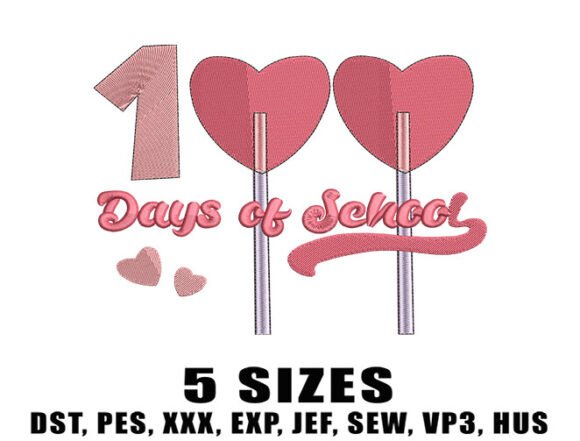
When I opened the 100th Day of School embroidery file, what struck me first wasn’t just the theme—it was the intention behind the shape and spacing. This isn’t a cluttered “100” with forced confetti or overworked fonts. It’s clean, slightly playful, and built for legibility at medium scale—think 3.5 to 4.5 inches wide. The numbers have gentle curves, subtle weight variation, and enough internal breathing room that satin-stitched outlines won’t bleed on cotton poplin or twill. As a designer who regularly ships custom embroidered tote bags for school PTA events, I immediately pictured it centered on a natural canvas bag—no background fill needed, just confident, friendly presence.
Where It Shines (and Where It Needs Care)
The 100th Day of School design feels tailor-made for custom apparel and handmade product lines aimed at early childhood educators, boutique nurseries, and craft fair shoppers. I tested it on a lightweight cotton sweatshirt—and yes, it held up beautifully with tear-away stabilizer and 40-weight polyester thread. The stitch density is moderate: no heavy fill-stitch blocks that could stiffen a baby onesie or distort a stretchy knit. That said, I’d avoid it on ultra-thin jersey without cutaway backing, especially around the inner curve of the “0”. On dark fabric, the design gains warmth—but only if your thread colors are rich enough to avoid muddiness in shadowed curves.
For embroidered patch use, it works well as-is—no extra border needed—but I’d recommend adding a simple merrow edge in production if selling commercially. On curved surfaces like caps? Proceed with caution. The horizontal layout doesn’t wrap naturally, and the “100” loses balance when stretched across a front panel. Better suited for flat zones: apron pockets, pillow covers, tea towels, or the chest area of a toddler tee.
Real-World Fit: From Classroom Gift to Etsy Listing
Last week, I used 100th Day of School to embroider a set of matching kitchen towels for a local preschool teacher’s gift bundle. Paired with a simple font-based “Ms. Lee’s Class” tag stitched below, it elevated the whole set from “cute” to “thoughtfully made.” Customers notice that difference—especially educators who see dozens of generic designs each year. The charm isn’t in complexity; it’s in clarity, rhythm, and age-appropriate joy. That same energy translates directly to Etsy seller listings: a clean printable mockup showing the design on a light gray sweatshirt or oatmeal tote reads as professional, not DIY-casual.
As a small shop product, it adds instant thematic cohesion—no need to build a full collection. One well-executed 100th Day of School design can anchor a limited-run capsule: baby onesies, mini backpacks, framed hoop art, even personalized library cards. But here’s the catch: it doesn’t scale down gracefully below 2.75 inches. Tiny lettering in the “100” starts to lose definition, and running-stitch accents blur. So skip it for keychains or enamel pin adaptations unless you’re redrawing it.
What Your Customers Actually See—and Trust
Let’s be honest: buyers don’t care about stitch count. They care whether the finished product looks intentional, durable, and worth the price. The 100th Day of School design supports that perception because it avoids visual noise. No tiny stars floating in negative space. No overlapping elements that invite thread nests. What they see is confidence—not perfection, but competence. That builds customer trust, especially for personalized gift buyers who’ve been burned by pixelated digital files before.
For craft business owners, this matters more than aesthetics alone. A clean 100th Day of School embroidery job on a premium towel tells your buyer, “I understand quality control.” It reinforces brand consistency—even if your shop sells everything from holiday embroidery to nursery decor. And yes, it boosts giftability: teachers display these items. Parents post them. That organic visibility is gold for handmade brands.
Practical Designer Notes Before You Stitch
- Always test on scrap fabric first—especially if using textured weaves like waffle-knit towels or looped terry.
- Check thread color contrast on both light and dark backgrounds. Some digitizers default to pastels that vanish on cream fabric.
- Review stitch density in tight corners—the inner “0” may benefit from slightly reduced density if your machine hesitates there.
- Confirm hoop size compatibility. If your smallest hoop is 4x4”, this design likely fits—but verify before hooping a delicate garment.
- Inspect small details at 200% zoom: look for stray jump stitches or underlay gaps near number junctions.
- Test in black-and-white mockups. If it reads clearly without color, your digital embroidery file has strong visual hierarchy.
- Use appropriate stabilizer: tear-away for stable wovens, cutaway for knits or high-wash items like baby clothes.
- Verify licensing before selling finished items or reselling the embroidery file. This is a Back To School themed machine embroidery design—not automatically cleared for commercial redistribution.
Final Thought: Design That Serves the Moment
The 100th Day of School isn’t trying to be everything. It’s a focused, joyful, technically sound embroidery project element—and that’s exactly why it works. In a market flooded with overly busy or poorly digitized themes, this one earns its place on a student’s backpack, a teacher’s mug cozy, or a boutique’s seasonal shelf. It doesn’t shout. It smiles. And in handmade work, that quiet confidence is often what turns a one-time buyer into a repeat customer. Just remember: respect the fabric, honor the stitch, and let the design do what it was made to do—celebrate a milestone, clearly and kindly.