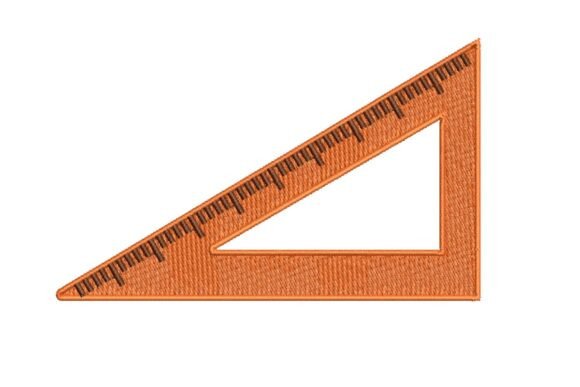
Orange Triangle Ruler Embroidery Design
A Sharp, Smart Choice for Brand-Forward Small Businesses
As an embroidery designer who’s digitized and stitched over 2,000 commercial designs for small businesses—from indie bakeries to architecture studios—I approached the Orange Triangle Ruler with both curiosity and scrutiny. At first glance, it’s more than a geometry tool: it’s a quiet statement of precision, clarity, and thoughtful craft. The title alone—Orange Triangle Ruler—signals boldness (orange), structure (triangle), and utility (ruler). That’s rare in Back To School-themed embroidery files, which often default to cartoonish apples or oversized pencils. This design feels intentionally modern—not playful, not nostalgic, but confidently functional. It reads as professional without stiffness, friendly without sacrificing authority. For a handmade shop, creative studio, or technical service brand, that balance is gold.
Where It Shines: Real-World Merch Applications
The Orange Triangle Ruler excels where subtlety meets recognition—especially in branded patches and uniform accents. On a woven cotton apron for a ceramic studio? It adds tactile credibility: precise, grounded, quietly skilled. As a chest patch on staff uniforms for a local architecture firm or drafting supply boutique? It reinforces expertise without shouting. On a structured cap front—think twill or wool blend—it holds clean lines and reads clearly at 2.5 inches wide. As a sleeve detail on unisex work shirts or a minimalist tote bag design, it delivers visual rhythm without overwhelming the garment. Even as a product label accent on handmade soap boxes or stationery packaging, its geometric clarity lends artisanal integrity.
For Etsy sellers and craft-based brands, the Orange Triangle Ruler works beautifully in printable mockups—its strong silhouette scales cleanly across digital assets. Paired with neutral thread colors (charcoal gray, deep navy, or cream), it supports cohesive design systems. It also integrates smoothly alongside other design assets: imagine it beside a monogram, a simplified compass icon, or even a hand-drawn botanical motif—its clean angles create intentional contrast, not competition.
Where to Use It Thoughtfully
Like any machine embroidery design, the Orange Triangle Ruler demands context-aware application. Its measurement markings—while elegant—are fine details. Below 1.75 inches in height, those lines risk blurring or stitching into one dense band, especially on textured fabric like canvas or brushed twill. Cap fronts with heavy curvature (e.g., low-profile snapbacks) may distort the triangle’s apex if not hooped with proper stabilizer support. And while orange thread pops vibrantly on light fabrics, it can fade visually on dark uniforms unless paired with high-contrast underlay or a subtle white outline.
Avoid using the Orange Triangle Ruler as a tiny logo on pen pockets or tag labels—its strength lies in legible geometry, not micro-detail. Also, skip it on high-wash items (like chef jackets or pet bandanas) unless you’ve confirmed stitch density and thread lock stability in testing. Overly dense fill areas near the ruler’s edges could pucker on lightweight knits or stretch fabrics without appropriate cutaway stabilizer.
Brand Identity & Customer Trust—Beyond Aesthetics
This isn’t just decoration—it’s brand language in thread. When customers see the Orange Triangle Ruler embroidered on a florist’s linen apron or a pet brand’s organic cotton tote, they subconsciously register care, intention, and attention to proportion. That builds trust faster than a slogan ever could. Unlike generic icons, it signals niche alignment: educators, makers, designers, engineers, and creatives recognize its symbolism instantly. That shared understanding strengthens customer engagement—especially in communities that value craft literacy and hands-on skill.
For small business merch, consistency matters. Because the Orange Triangle Ruler avoids dated trends or seasonal clichés, it supports long-term visual consistency across seasons and product lines. It doesn’t scream “Back To School”—it whispers “thoughtful process,” making it equally relevant in spring launches or holiday gift sets. That timelessness elevates perceived product value and positions your handmade product as considered, not disposable.
Practical Designer Notes Before You Stitch
Before committing to production, run these checks:
- Test in black and white first—verify contrast and shape integrity without color distraction.
- Check minimum viable size: embroider a 1.5-inch version on your target fabric to assess marking clarity.
- Review thread color contrast carefully—orange against khaki, navy, or charcoal needs deliberate saturation; consider matte vs. glossy thread sheen.
- Inspect spacing between measurement ticks—tight spacing increases stitch density and may require reduced fill percentage for breathability.
- Confirm hoop size compatibility with your embroidery machine and intended placement (e.g., cap frames vs. flat hoops).
- Test on real fabric, not just tear-away stabilizer—layer with cutaway or mesh for structured items like caps or patches.
- Create a physical mockup for client approval before bulk runs—digital previews don’t capture texture or drape.
- Compare it beside your other design assets—does it harmonize in weight, scale, and tone?
- Verify commercial licensing before use on merchandise sold to end customers—this is non-negotiable for small business merch and custom apparel.
The Orange Triangle Ruler isn’t just another embroidery file—it’s a versatile, intelligent asset for businesses that speak in lines, angles, and intention. Whether you’re digitizing for a local café’s barista aprons or sourcing a digital embroidery file for your own Etsy shop, this design earns its place in your toolkit. It’s precise enough for professionals, warm enough for handmade presentation, and distinctive enough to stand out in a crowded market—all without saying a word.