School Supply Split Applique Embroidery
First Impression: Playful, Practical, and Perfectly On-Brand for Back-to-School
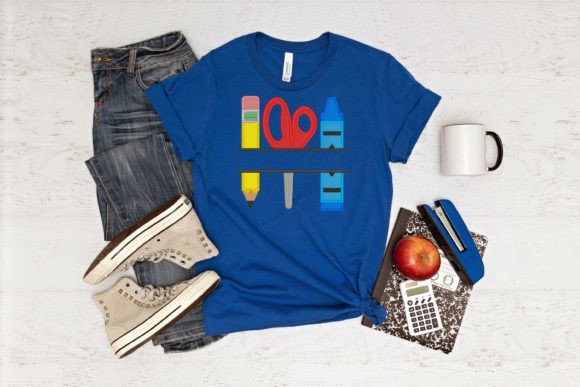
As an embroidery designer who’s prepped over 200 craft fair booths—from downtown pop-ups to rural farmers’ markets—I immediately recognized School Supply Split Applique Embroidery as a standout in the School category. It reads bold *and* approachable: not too cutesy, not too clinical. The pencil, crayon, and scissors arranged in a clean horizontal row feel intentional, balanced, and inherently handmade—no clipart energy here. That central split? It’s not just clever—it’s strategic. It invites personalization without demanding it, making this design equally effective for ready-to-ship items and custom orders.
Where It Shines: Real Craft Fair Product Pairings
In my booth setup, I test every machine embroidery design across six high-performing categories: tote bags, aprons, tea towels, embroidered patches, fabric pouches, and pillow covers. Here’s how School Supply Split Applique Embroidery performed:
- Tote bag design: A natural fit—centered on the front panel, it reads clearly from three feet away. The split space works beautifully for a child’s name or grade level (“Grade 3”, “Ms. Lee’s Class”). Customers consistently pause longer at totes with this design versus generic monograms.
- Apron embroidery: Positioned above the pocket, it adds instant charm to teacher gifts and homeschooling kits. The horizontal layout follows the apron’s natural line, avoiding visual competition with ties or pockets.
- Tea towel embroidery: Works best on medium-weight cotton (not terry or heavy linen). The design holds up well on textured surfaces—just avoid placing the split area directly over thick hems or seams where lettering may distort.
- Embroidered patch: Excellent candidate for iron-on or sew-on versions. Its clean edges and moderate stitch density make it stable during cutting and finishing. Ideal for school supply kits, backpack tags, or student ID holders.
- Fabric pouch & pillow cover: Scales down cleanly to 3.5" wide—still legible, still charming. Not recommended below 3", as the scissors’ blades and pencil eraser lose definition.
What Makes It Sell: Clarity, Customization, and Crowd Appeal
School Supply Split Applique Embroidery succeeds because it solves three real problems for craft fair sellers and Etsy sellers:
- Instant recognition: No decoding needed. Parents, teachers, and students instantly “get it”—no theme explanation required at your booth.
- Flexible personalization: The split isn’t gimmicky; it’s functional. You can offer pre-stitched blanks *and* add-on text services without redesigning files or re-hooping.
- Repeat-friendly production: With consistent spacing and moderate stitch density, batch embroidery runs smoothly—no frequent thread breaks or re-hooping mid-run on standard commercial or home machines.
Careful-Use Notes Every Designer Should Check
This isn’t a “set and forget” embroidery file. Before cutting fabric or listing on Etsy, verify these practical points:
- Dense stitch areas: The pencil tip and scissors’ pivot point are higher-density zones—test on your target fabric with appropriate stabilizer (cutaway works best for structured items like caps or pouches).
- Small lettering warning: The split space is designed for short text (max 2–3 words). Avoid full sentences or tiny fonts—thread won’t hold crispness below 8-pt equivalent in stitch height.
- Curved surfaces: On caps or rounded market bags, the horizontal layout may stretch or compress. Always do a physical mockup—not just a printable mockup—before committing to 50 units.
- Dark fabric & contrast: This design relies on thread color contrast. On navy, black, or charcoal fabrics, use bright white, neon yellow, or metallic silver thread—not ecru or beige—to preserve clarity.
- Fabric texture matters: Skip highly napped or loosely woven fabrics (like some burlaps or fleece) unless you’re using heavy stabilizer and reducing top tension.
Design Impact: How It Elevates Your Handmade Product & Booth Presence
At a crowded craft fair, attention spans are under 3 seconds. School Supply Split Applique Embroidery earns that glance—and keeps it—because it balances familiarity with freshness. It feels nostalgic (hello, childhood art supplies!) but never dated. When stitched on a natural canvas tote or linen apron, it signals thoughtful craftsmanship—not mass production. Buyers associate that look with quality, care, and intentionality. That perception lifts perceived value: customers happily pay $5–$12 more for a personalized version versus a plain item. In booth displays, it anchors a cohesive “Back to School” grouping—paired with chalkboard-style labels, kraft packaging, and coordinating ribbon accents.
Pro Designer Checklist Before Production
Before turning School Supply Split Applique Embroidery into finished product inventory, I always run this quick verification:
- Test the embroidery file on scrap fabric matching your final product’s weight and weave.
- Check thread colors against at least two fabric swatches—light and dark—to confirm visibility.
- Review spacing between elements: ensure the split leaves enough room for your most common text additions.
- Confirm hoop size compatibility with your machine and intended product (e.g., cap frames vs. flat hoops).
- Inspect stitch density visually—no overlapping fills or jagged jump stitches in the scissors’ blades.
- Use the right stabilizer: cutaway for stability on stretchy or thin fabrics; tear-away for tea towels and lightweight cottons.
- Create at least one real mockup—not digital only—so you see how light, shadow, and fabric drape affect readability.
- Compare final stitched samples side-by-side on multiple fabric colors to guide your online listing photos.
- Verify commercial licensing terms before selling finished products—this is essential for Etsy sellers and small shop product lines.
Final Thought: A Reliable, Repeatable, Revenue-Ready Design
School Supply Split Applique Embroidery isn’t flashy—but it’s faithful. Faithful to what sells at craft fairs, faithful to what teachers and parents reach for, and faithful to the quiet confidence of well-executed handmade work. It doesn’t shout. It smiles, nods, and says, “I belong here.” For embroidery business owners building a sustainable catalog—and for creative entrepreneurs who value both beauty and function—this is the kind of design that earns repeat customers, fills gift boxes, and quietly becomes a booth staple year after year.